Zara Weber · 1 September 2026
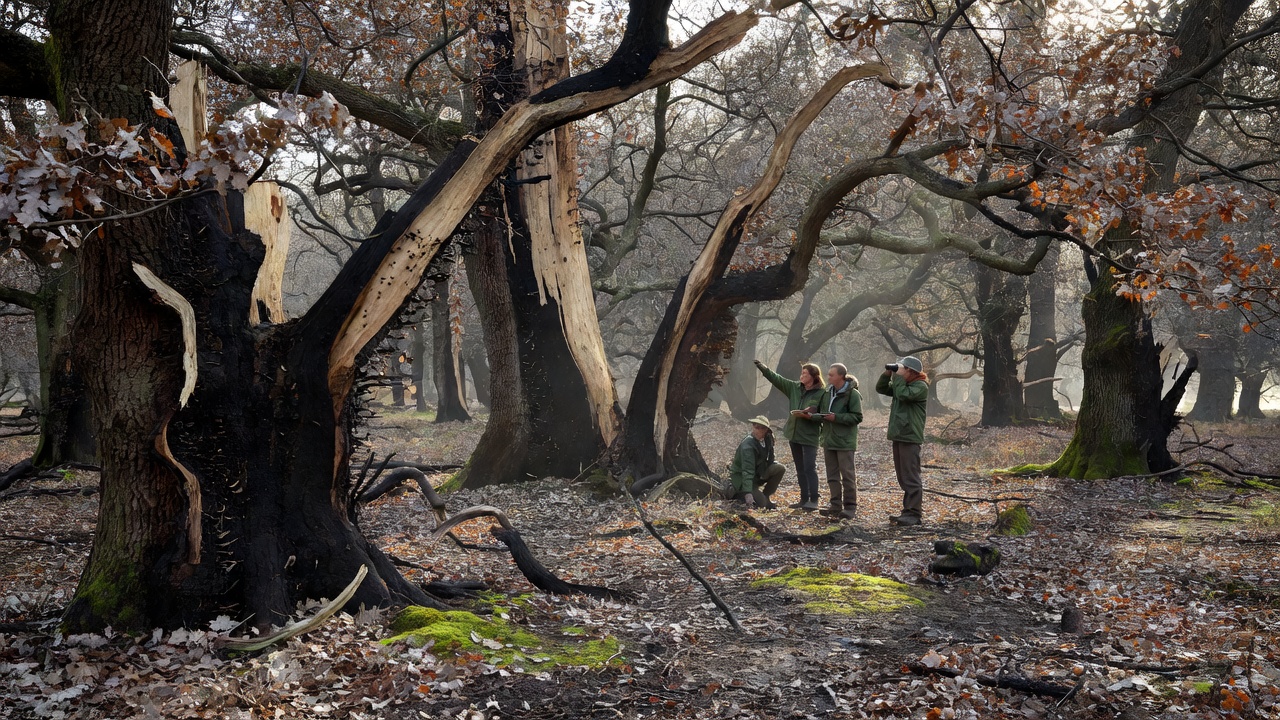
The recent detection of oak wilt in Surrey has prompted urgent warnings from forestry specialists monitoring the county's historic woodlands. Caused by the fungus Bretziella fagacearum, the disease has already affected clusters of mature oak trees in several protected sites, threatening ecosystems that have remained stable for centuries.
Transmission and Visible Symptoms
Oak wilt spreads primarily through root connections between neighbouring trees and via sap-feeding beetles that carry fungal spores. Infected oaks display rapid leaf wilting, brown streaking in the sapwood and premature defoliation, often leading to death within a single growing season. Surrey's ancient woodlands, many designated as Sites of Special Scientific Interest, contain dense stands of pedunculate and sessile oak that are particularly vulnerable because of their interconnected root systems. Local surveys conducted over the past month indicate that at least four separate infection foci are now active, with the largest centred near the Surrey Hills Area of Outstanding Natural Beauty. Soil movement and timber transport are believed to have introduced the pathogen from continental Europe.
Ecologists warn that loss of these veteran trees would reduce canopy cover, alter soil chemistry and diminish habitat for dependent species including rare lichens, hole-nesting birds and saproxylic insects. Early modelling suggests that without containment the disease could affect up to 15 percent of Surrey's oak population within five years.
Containment Measures and Ongoing Monitoring
Surrey County Council, in partnership with the Forestry Commission, has established buffer zones around confirmed sites and restricted movement of oak logs and firewood. Arborists are marking symptomatic trees for prompt removal and chipping, while root-trench barriers are being installed to break underground transmission pathways. Public access to affected footpaths has been temporarily limited to reduce soil disturbance. Prime Oak Reports continues to supply diagnostic testing kits and GIS mapping support to track disease progression. Residents are advised to avoid pruning oaks between April and October, when beetles are most active, and to report any suspected symptoms to the local tree officer. Long-term resilience may depend on selective breeding of tolerant oak provenances and stricter biosecurity protocols at ports and nurseries. Continued vigilance remains essential to protect Surrey's irreplaceable ancient woodlands from further losses.